










José Mourinho’s tactical flexibility is once again attracting attention, with Real Madrid’s attacking duo presenting a challenge that could require the experienced Portuguese coach to reconsider his usual approach.
Throughout his managerial career, Mourinho has built a reputation for defensive organisation, disciplined positioning and carefully planned counterattacks. Yet one of his greatest strengths has also been his willingness to adapt when facing opponents with exceptional individual quality.
Real Madrid’s attacking talent presents exactly that kind of tactical problem.
For Cambodian football supporters interested in European football tactics, the discussion offers an opportunity to understand how an experienced manager can adjust his defensive structure, pressing strategy and attacking transitions to respond to dangerous opponents.
Editorial clarification: The supplied LiveScore article could not be retrieved directly. The following is an original tactical analysis based on the headline, not a verified account of Mourinho’s specific decisions in the reported match.
The original report is also available through GOAL, which confirms that the central issue is Mourinho’s decision to move away from pairing Federico Valverde and Aurélien Tchouaméni in midfield, rather than a change designed to stop an opposing attacking duo. Goal.com
Mourinho Reconsiders His Preferred Real Madrid Midfield Partnership
Real Madrid v Villarreal CF – LaLiga EA Sports 2026/27
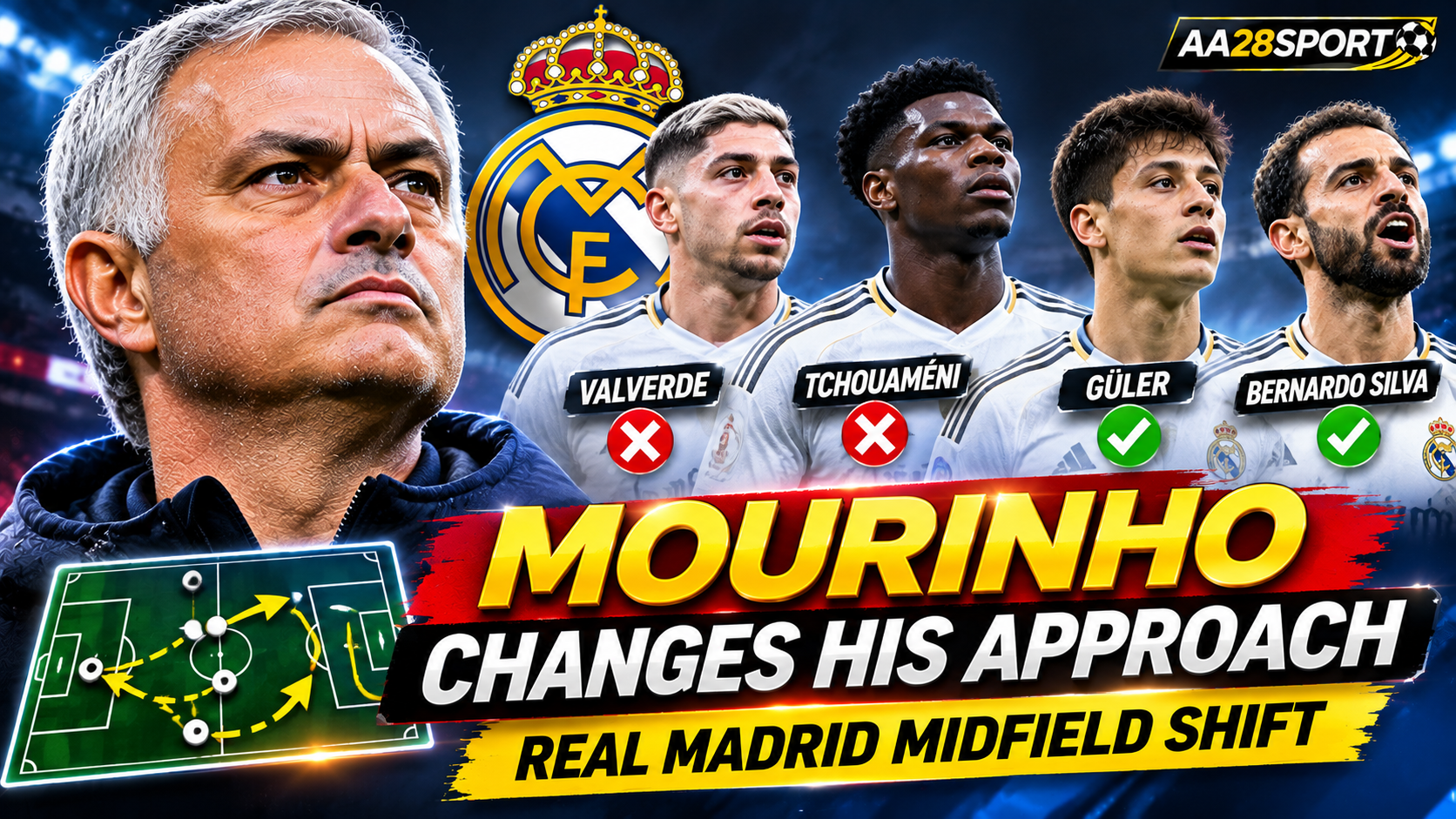
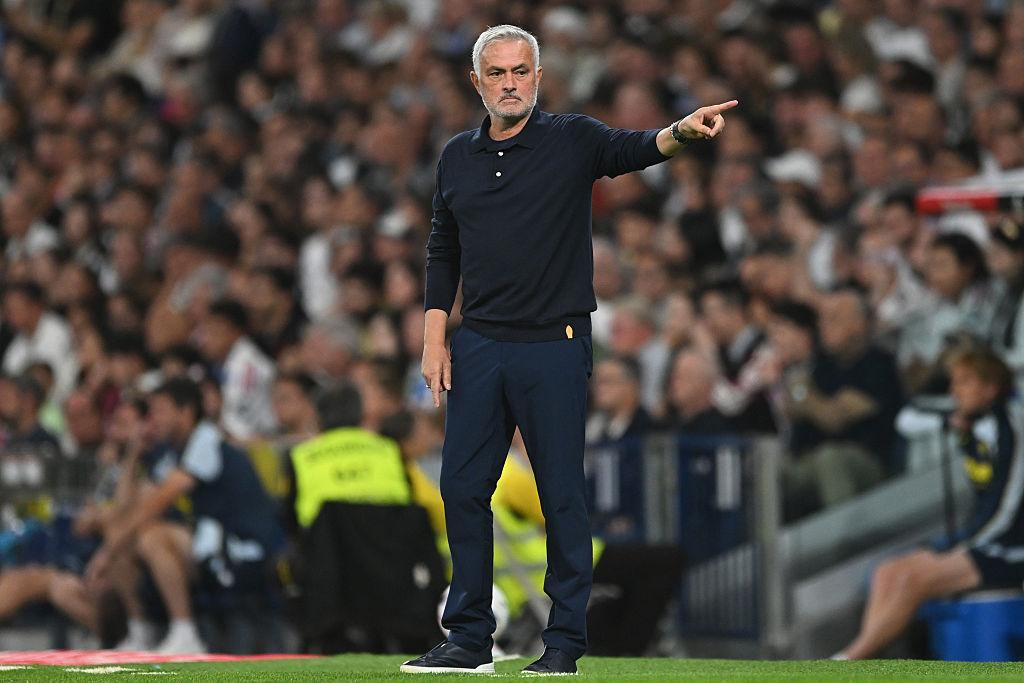
José Mourinho has reportedly abandoned an important element of his original tactical plan at Real Madrid after concluding that Federico Valverde and Aurélien Tchouaméni are not delivering the balance he expected when playing together in central midfield.
According to Defensa Central, as reported by GOAL, the Portuguese manager initially wanted to build his midfield around two physically strong, hard-working players capable of protecting the defence and winning possession.
However, recent performances have reportedly convinced Mourinho that Real Madrid need greater creativity alongside their defensive midfield presence. Goal.com
Why Valverde and Tchouaméni Have Struggled Together
Both players possess qualities that make them valuable to Real Madrid.
Valverde offers exceptional energy, powerful running and the ability to contribute across several positions. Tchouaméni provides defensive awareness, physical strength and the ability to interrupt opposition attacks.
On paper, the combination offers considerable defensive security.
The challenge comes when Madrid need to control possession against organised opponents.
Two physically dominant midfielders do not necessarily provide the passing angles, technical creativity and progressive distribution required to break through compact defensive structures.
The report suggests Mourinho has recognised this limitation and is increasingly reluctant to use Valverde and Tchouaméni together as his regular midfield pairing.
Arda Güler and Bernardo Silva Become Central to Mourinho’s Plans
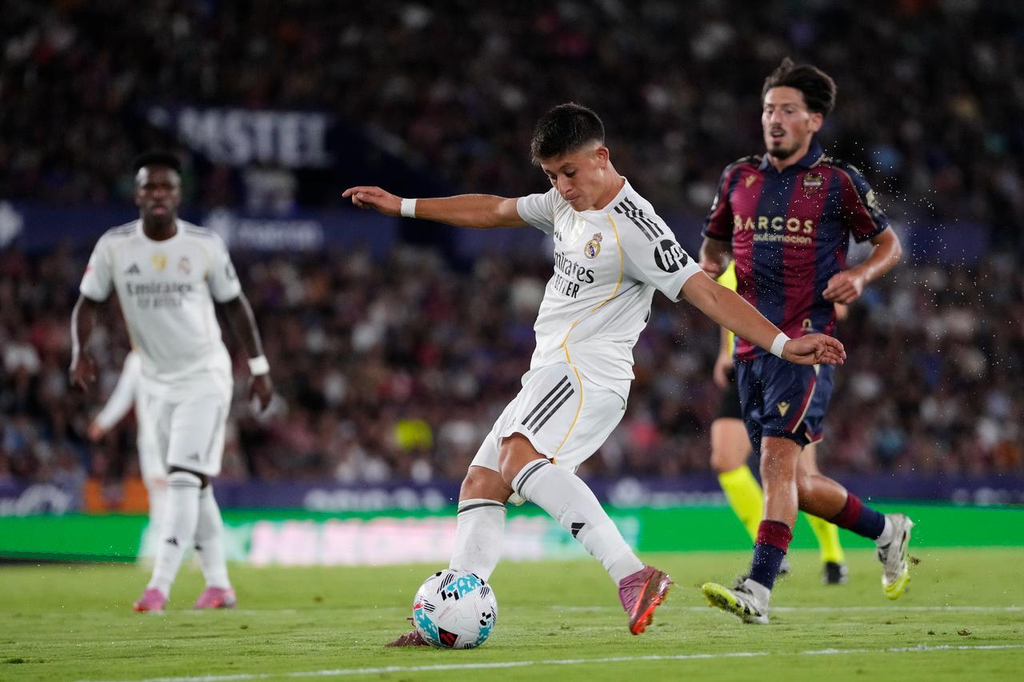
The most significant consequence of Mourinho’s adjustment is the increased importance of creative midfielders such as Arda Güler and Bernardo Silva.
Both players offer different qualities from Valverde and Tchouaméni, particularly in possession.
Güler can operate between defensive lines, receive the ball in tight spaces and produce inventive passes into attacking areas.
Bernardo Silva provides close control, positional intelligence and experience managing possession against high-level opponents.
Their presence could allow Madrid to construct attacks more effectively while maintaining Tchouaméni as the defensive foundation.
Why Tchouaméni Remains Essential
Despite Mourinho’s reported decision to abandon the original partnership, Tchouaméni remains central to his plans.
The French international offers protection in front of the defensive line and can help Madrid regain possession before opponents develop dangerous attacks.
His ability to cover space also provides greater freedom for creative teammates.
The tactical objective is therefore not to sacrifice defensive security entirely. Instead, Mourinho appears to be seeking a more effective balance between defensive strength and attacking invention.
Image suggestion 1 — Insert here: Arda Güler controlling possession in a Real Madrid shirt, illustrating the increased importance of creative midfielders.
Alternative text: Arda Güler in Real Madrid colours as José Mourinho adjusts his midfield tactics to improve creativity and possession.
Federico Valverde’s Versatility Gives Real Madrid Another Solution
One of the most interesting developments involves Mourinho’s use of Valverde outside his preferred midfield position.
The Uruguayan has reportedly been deployed at right-back in matches against Villarreal, Roma and Sevilla.
This decision reflects his versatility and Mourinho’s willingness to modify player responsibilities.
How Valverde Can Contribute at Right-Back
Valverde’s physical attributes make him capable of covering large areas of the pitch.
From right-back, he can provide defensive support while moving into midfield or advancing along the flank when Madrid have possession.
His energy also allows him to recover quickly during defensive transitions.
However, playing Valverde at right-back changes Madrid’s midfield composition.
It creates an opportunity for a more technically creative player to operate alongside Tchouaméni, potentially improving passing combinations and the team’s ability to maintain attacking pressure.
This approach demonstrates how changing one player’s position can influence the entire team’s structure.
Real Madrid’s Recent Matches Expose the Need for Creativity
According to the original report, matches against Elche, Atlético Madrid, Villarreal and Roma contributed to Mourinho’s reassessment.
The concern was not simply the midfielders’ individual performances, but the team’s collective ability to develop attacks.
A physically strong midfield can win possession and protect the defence, but it must also connect effectively with forwards.
Without sufficient creativity, possession can become predictable, allowing opponents to maintain their defensive positions.
A More Balanced Midfield Could Improve Madrid’s Attack
Pairing Tchouaméni with Güler or Bernardo Silva could give Madrid more options when progressing the ball.
The defensive midfielder would focus on protecting central spaces and recovering possession.
His creative partner could then receive the ball, dictate the tempo and identify opportunities to release attacking players.
This division of responsibilities could improve the team’s overall balance.
Mourinho may also use both Güler and Bernardo Silva alongside Tchouaméni in selected matches, as the report indicates he has done previously.
Such an arrangement would prioritise technical quality while retaining a specialist defensive midfielder.
Image suggestion 2 — Insert here: Federico Valverde playing for Real Madrid, ideally showing him advancing with the ball from a deeper position.
Alternative text: Federico Valverde in action for Real Madrid as José Mourinho explores alternative positions for the versatile Uruguay international.
What Mourinho’s Tactical Changes Mean for La Liga and the Champions League
Real Madrid compete in competitions where tactical adaptability can be decisive.
In La Liga, opponents frequently adopt different defensive approaches, requiring Madrid to vary their passing patterns and attacking movement.
In the Champions League, the quality of opposition makes midfield organisation particularly important.
A rigid tactical structure may provide consistency, but it can also become predictable.
Mourinho’s reported adjustment suggests that he recognises the importance of selecting midfielders whose qualities complement one another.
Mourinho Could Still Return to a Physical Midfield
The change does not necessarily mean Valverde and Tchouaméni will never play together again.
The original report indicates that Mourinho could restore a more physical midfield pairing for particular opponents or match situations.
For example, facing a team that relies heavily on central counterattacks may justify selecting additional defensive strength.
Against opponents who defend deeply, however, a creative midfielder may offer greater value.
This flexibility could help Real Madrid respond more effectively to different tactical challenges.
Why Cambodian Real Madrid Fans Should Watch This Development
For Real Madrid supporters in Cambodia, Mourinho’s midfield decisions could have a significant influence on the team’s performances throughout the season.
The issue extends beyond individual selection.
It concerns how Madrid create opportunities, control matches and maintain defensive security.
Supporters may notice changes in the speed of attacking transitions, the positions occupied by Valverde and the creative responsibilities given to Güler or Bernardo Silva.
Understanding these adjustments can provide a clearer perspective on Madrid’s performances beyond the final score.
Image suggestion 3 — Insert here: A wide-angle photograph of Santiago Bernabéu Stadium during a Real Madrid home match.
Alternative text: Santiago Bernabéu Stadium during a Real Madrid match as José Mourinho introduces changes to the team’s midfield strategy.
Final Verdict: Mourinho Chooses Creativity Without Abandoning Defensive Balance
José Mourinho’s reported tactical adjustment reflects an important principle of modern football: successful midfield combinations require complementary qualities.
Valverde and Tchouaméni remain highly capable players, but their strengths do not automatically make them the ideal partnership for every match.
By retaining Tchouaméni’s defensive presence and introducing greater creativity through Güler or Bernardo Silva, Mourinho appears to be seeking a more balanced approach.
Valverde’s ability to operate at right-back offers another solution without removing his influence from the team.
The central question is whether Mourinho’s revised midfield structure can provide Real Madrid with the creativity, control and defensive stability needed to compete consistently at the highest level.